A damaged or unwanted tree can quickly become another major task on a homeowner’s list. It may be leaning toward the house, dropping large branches, or standing where you plan to build. Still, removing a tree is not a job to handle with a ladder and a chainsaw.
In the Waukesha area, the tree’s size, condition, and location all affect how the work should be completed. Nearby structures, overhead lines, wet soil, and limited yard access can make the job even more difficult. Darryl’s Tree Service uses professional equipment to control how each part of the tree is cut, lowered, moved, and cleaned up.
Does Removing a Tree Require Special Equipment?
Yes, removing a tree usually requires much more than a chainsaw. Professional crews may use aerial lifts, rigging systems, ropes, wood chippers, loaders, cranes, and stump grinders based on the tree and its location. This equipment helps workers reach high branches, handle heavy wood, and keep falling sections away from homes, vehicles, fences, and nearby trees.
What Equipment Is Used for Tree Removal?
There is no single machine used for every tree. Before work begins, the tree removal company needs to look at the tree’s height, condition, lean, and surrounding space. That information determines which equipment the job calls for.
Common tree removal equipment includes:
- Chainsaws: Different saw sizes may be used for smaller branches, large limbs, and the trunk.
- Aerial lifts: A bucket truck or lift provides controlled access to upper parts of the tree.
- Climbing equipment: Harnesses, climbing lines, and other gear may be needed when a lift cannot reach the work area.
- Rigging systems: Ropes, blocks, and lowering devices help guide cut sections safely to the ground.
- Cranes: A crane may be used when large sections cannot be dropped into an open area.
- Wood chippers: Branches and brush can be processed efficiently once they reach the ground.
- Loaders or skid steers: Heavy logs can be moved without dragging them across the lawn.
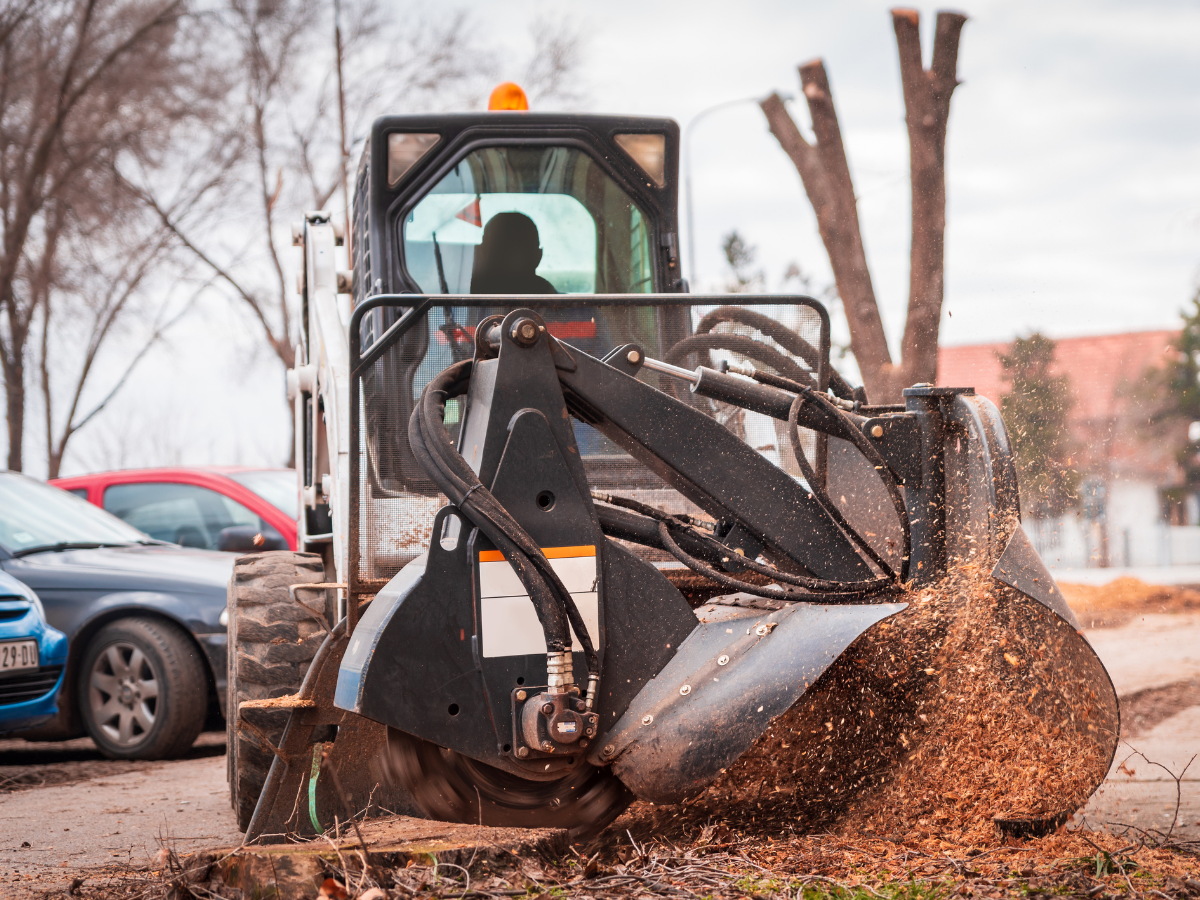
- Stump grinders: After the tree is down, a grinder can reduce the remaining stump below ground level.
The equipment used for a tree removal service depends on the property. A tree in an open field can often be handled differently from one growing between a garage and a neighboring fence.
Why a Chainsaw Is Not Enough
A chainsaw cuts wood, but it does not control where that wood goes. A large branch may weigh hundreds of pounds. Its direction can change once cutting starts, especially when the tree is leaning, cracked, hollow, or under pressure.
Tree removal also creates hazards above and below the person using the saw. Falling branches can strike people standing nearby. A trunk may split without warning. A ladder can move when a branch shifts, and a cut section may swing back toward the person holding the saw.
Power lines create another serious concern. A worker, branch, rope, tool, or piece of equipment can make contact with an energized line. OSHA safety guidance identifies falls, falling objects, chainsaws, heavy machinery, and electrical contact as common hazards in tree-care work.
Professional tree removal is planned around these risks. Rigging systems and mechanical equipment give the crew more control over each piece. A homeowner with a rented saw and ladder does not have the same setup.
When Professional Equipment Matters Most
Professional help should be called whenever a tree is too large to handle safely from the ground. Special equipment becomes even more important when the tree is:
- Close to a house, garage, shed, or fence
- Near utility lines
- Leaning toward another property
- Dead, hollow, split, or storm-damaged
- Surrounded by landscaping or other trees
- Located in a tight backyard
- Too large for an open drop zone
- Growing on wet, frozen, sloped, or uneven ground
Storms, heavy snow, strong winds, and saturated soil can weaken trees throughout southeastern Wisconsin. Damage is not always easy to see from the ground. A trunk may look solid while hidden decay or cracking has reduced its strength.
Regular tree trimming may help address weak, dead, or overgrown branches before they become a larger problem. However, trimming is not enough when the trunk or root system has become unstable. That is when the entire tree may need to come down.
A small branch that is already resting on open ground may be manageable for some homeowners. A standing tree is different. Once the work involves climbing, overhead cutting, rigging, or powered lifting equipment, it belongs in professional hands.
Professional Tree Removal vs. DIY Cutting
DIY tree cutting often starts with the belief that the tree will fall in one clear direction. That plan can change quickly when the saw reaches compressed wood, hidden decay, or an uneven trunk. Wind and weight distribution can also affect the tree after cutting begins.
A professional crew can divide the tree into smaller sections and choose equipment based on the available space. Workers on the ground can manage ropes, clear debris, and maintain the work area while the cutting is completed.
Professional service also handles what happens after the tree comes down. Branches need to be chipped or hauled away. Logs must be moved, and the remaining stump may interfere with mowing, construction, or future landscaping. Our stump grinding service can address that final part of the job.
For a busy homeowner, calling one company to manage the removal and cleanup is far more practical than renting equipment, arranging debris disposal, and accepting the risks of DIY cutting.
Call Darryl’s Before Removing a Tree
Removing a tree requires the right equipment, a clear work plan, and people who know how to manage heavy sections of wood. Renting or buying a chainsaw does not provide the control needed for a tree near a home, driveway, utility line, or neighboring property.
Darryl’s Tree Service provides efficient residential tree removal for homeowners who want the work completed correctly without turning it into a drawn-out project.
Before removing a tree on your Waukesha area property, call Darryl’s Tree Service for a free estimate. We will assess the tree, determine what equipment is needed, and handle the removal and cleanup.