When a tree comes down, the wood does not simply disappear with it. Tree removal companies may chip smaller branches, cut the trunk into sections, haul material away, or leave usable wood for the homeowner depending on the job. The size and condition of the tree, access to the property, and what is included in the removal all affect what happens next.
For Waukesha area homeowners, this is worth asking about before work starts. A mature maple, oak, or other large tree can create far more wood than it seems to while standing. Knowing how the logs, branches, and chips will be handled prevents an unwanted pile from becoming your next weekend project.
Darryl’s Tree Service provides residential tree removal throughout the Waukesha area. If a tree needs to come down, the removal itself is only one part of what homeowners should discuss when planning the job.
What Do Tree Removal Companies Do With Logs and Branches?
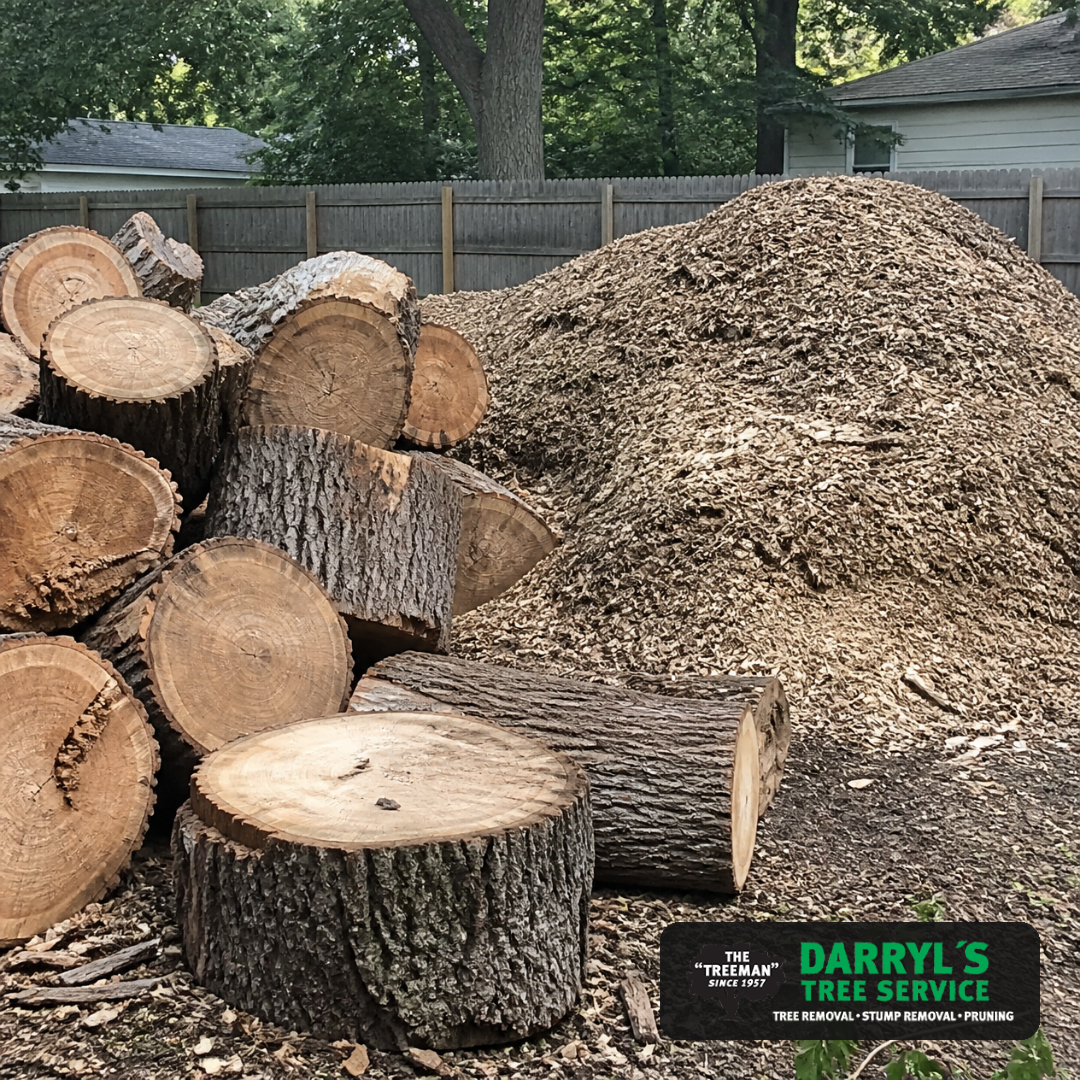
Different parts of a removed tree can be handled in different ways. Smaller limbs and branches are commonly chipped because that greatly reduces the amount of material that needs to be moved. Larger limbs and trunk sections are too large for the same process and may need to be cut into shorter pieces.
Those larger pieces may be hauled away, processed for another use, or left on the property when that is part of the plan. Some wood can eventually be used as firewood. Other pieces may be too large, damaged, decayed, or otherwise impractical for a homeowner to keep.
This is why it helps to talk about cleanup before the first cut is made. Do not assume every tree removal quote handles logs, chips, branches, and the stump in exactly the same way. Ask what will remain on the property when the work is complete.
That one question can make a major difference when the tree is large.
Can I Keep the Wood After Tree Removal?
Homeowners may want to keep some wood if they have a fireplace, wood stove, outdoor fire pit, or another use for it. Before asking to keep everything, though, consider how much material one mature tree can produce.
A few cut logs are manageable. A full trunk divided into heavy sections can require significant space, additional cutting, and splitting before you can use it. Freshly cut wood also contains considerable moisture, so it generally needs time to dry before it works well as firewood.
There is also a difference between keeping wood where the tree was removed and hauling it somewhere else.
Wisconsin takes firewood movement seriously because insects and diseases can travel inside wood. The Wisconsin DNR advises people to obtain firewood near where they will use it or purchase properly treated certified wood. Restrictions can also apply when firewood is moved into state-managed properties or across certain quarantine boundaries.
If you plan to keep wood from a removed tree, tell the tree company before the job begins. You can then discuss whether leaving some of the usable sections makes sense for your property.
Does a Removed Tree Automatically Become Firewood?
No. A tree coming down does not automatically mean the entire trunk is ready to become firewood.
The species and condition of the tree matter, and fresh wood normally needs to dry before burning. Large sections also have to be cut and split into practical sizes. Wood that has been sitting in a fireplace rack for months is very different from a heavy section of trunk that was standing in your yard that morning.
Darryl’s Tree Service has a separate firewood service offering mixed hardwood, split dry firewood, and oak firewood in the Milwaukee and Waukesha areas. That distinction is useful for homeowners. Wood removed from a property and firewood that has already been processed for use are not necessarily the same thing.
If your reason for keeping the logs is to burn them, think about the work and storage involved before deciding how much you want left behind.
What Happens to Wood Chips After Tree Removal?
Branches and smaller pieces of wood can take up an impressive amount of space once they are on the ground. Chipping reduces that material into a much smaller volume that is easier to handle.
Homeowners sometimes want wood chips for pathways, natural areas, or landscape beds. Whether chips from a particular removal are useful on your property depends on the material and what you plan to do with it.
It is still worth asking rather than assuming the chips will stay.
If you want chips for another part of the yard, bring that up before work starts. If you do not want a pile of chips left behind, that is something you should understand beforehand too. The same applies to large logs.
Tree removal cleanup is much easier when everyone knows the plan before the tree is on the ground.
What About the Stump?
The stump is a separate consideration from the branches and trunk.
Cutting a tree down leaves the lower portion of the trunk and root system in place unless additional work is done. If you need that area for grass, landscaping, a new project, or simply do not want to work around an old stump, ask how stump removal fits into the job.
This matters more than it may seem when you are planning a project around the space. A homeowner removing a tree because it blocks a future patio, garden, or other landscaping has a different end goal than someone who simply needs a damaged tree taken down.
Darryl’s provides stump removal as part of its broader tree services, so homeowners can think about the entire area rather than only what is above ground.
Ask These Questions Before the Tree Comes Down
The easiest time to figure out what will happen to the wood is before the removal begins.
Ask whether logs and branches will be hauled away. Find out what happens to the wood chips. Mention it if you want to keep some usable wood. Ask separately about the stump if you want the area cleared after the tree comes down.
You should also mention access issues. A tree next to an open driveway presents a different cleanup situation than a large backyard tree behind a fence or surrounded by landscaping. Large trunk pieces are extremely heavy, so access can affect how the job needs to be handled.
These questions are not small details. They help define what “finished” means for your property.
For a busy homeowner, that is often what matters most. You are not hiring someone simply to put a tree on the ground. You need to know what the yard will look like afterward and whether there is anything left for you to deal with.
Know What Your Tree Removal Includes
Tree removal companies can handle the wood in several ways, from chipping branches and cutting logs into sections to hauling material away or leaving usable wood when requested. There is no reason for a Waukesha area homeowner to guess which of those will happen at their house.
Ask about the wood, chips, cleanup, and stump while discussing the removal. It is much easier to make those decisions before a large tree is spread across the yard.
Darryl’s Tree Service has provided tree care in southeastern Wisconsin since 1957. If you have a tree that may need to come down, contact Darryl’s for a free estimate and talk through what the complete job will involve.

